
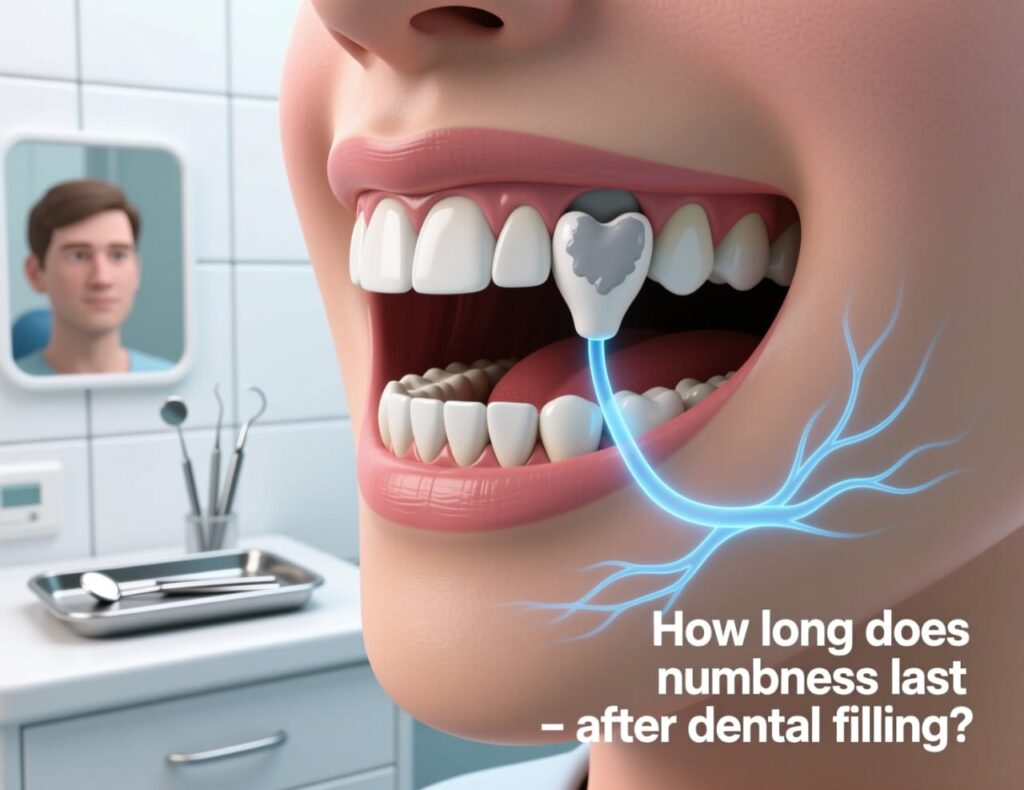
Experiencing numbness after a dental procedure is very common, and many patients ask, “How long does numbness last after dental filling?” This sensation occurs because dentists use local anesthesia to block pain during the procedure. Feeling a heavy or tingly lip, tongue, or cheek is completely normal and usually goes away after a few hours. The exact duration can vary depending on the type of anesthetic, the location of the tooth, your metabolism, and the complexity of the dental procedure. Understanding why numbness happens and how long it typically lasts helps patients avoid injuries and manage their recovery safely.
Why Numbness Happens After a Dental Filling
During a dental filling, dentists inject anesthetic near the nerve that controls sensation in the affected tooth and surrounding tissues. This anesthetic temporarily blocks nerve signals so that you do not feel pain during the procedure. The numbness in lips, cheeks, and tongue occurs because the nerves responsible for these areas are also affected by the medication.
Different types of anesthetics act for varying durations. For example, lidocaine usually wears off within 1–3 hours, while bupivacaine can last longer. Factors such as dosage, individual metabolism, and whether multiple teeth are treated can influence how long the numbness remains. Knowing this helps patients understand that numbness is a temporary and natural part of dental recovery.
How Long Numbness Lasts
The typical duration of numbness varies depending on the location of the tooth and the type of anesthetic used. Generally, upper teeth recover faster, whereas lower teeth take longer because of thicker nerves in the jaw. Most patients regain full sensation within 1–3 hours, though in some cases it can last up to 5 hours.
| Tooth Location | Typical Numbness Duration |
| Upper teeth | 1–2 hours |
| Lower teeth | 2–4 hours |
| Multiple fillings | Up to 5 hours |
Individual factors such as age, metabolism, and health conditions can also influence recovery time. Children often regain sensation faster than adults, while older adults may experience a slightly longer numb period. Patients should always expect some variability and be prepared to manage numbness safely.
Factors Influencing the Duration
Several key factors determine how long numbness lasts after a dental filling. The type of anesthetic plays a major role. Short-acting anesthetics like lidocaine wear off quickly, while long-acting anesthetics like bupivacaine can last several hours. Dosage is another factor; larger amounts may prolong numbness.
Other elements include metabolism, age, and overall health. People with slower metabolism or certain medical conditions may process anesthetics more slowly. The complexity of the dental procedure also matters. Multiple fillings or deep cavity treatment can increase the amount of anesthetic needed, which can extend numbness. Understanding these factors helps patients anticipate the recovery process and follow appropriate care strategies.
What to Expect During Numbness
During the numb period, patients often notice that the tongue feels heavy, the lips feel thick, or the cheeks are tingly. Speaking clearly or eating can be challenging. Accidental biting of the lips, cheeks, or tongue is common because patients cannot feel their mouth accurately. This is especially risky for children and elderly adults.
It is important to protect the mouth during this period. Eating only soft foods, avoiding hot beverages, and being mindful of tongue and lip movements are key. These precautions prevent injuries and help patients feel more comfortable until full sensation returns.
Tips to Manage Numbness Safely
Managing numbness effectively requires attention and simple care strategies. Avoid chewing hard or sticky foods during the numb period to prevent accidental bites. Stick to soft foods such as yogurt, oatmeal, mashed potatoes, or smoothies. Gentle jaw and tongue movements help increase circulation, which can speed up recovery. Lightly talking, moving the tongue, and slowly opening and closing the mouth are safe ways to encourage the anesthetic to wear off naturally.
Applying a warm compress externally to the cheek can improve blood flow and reduce discomfort. The compress should be warm but not hot, and applied for 5–10 minutes at a time. Hydration also plays an important role. Drinking water helps your body metabolize the anesthetic efficiently, while alcohol and caffeine should be avoided as they can slow recovery.
Children and older adults require extra care. Children should be reminded that their lips and tongue are “asleep,” and supervision is needed to prevent self-biting. Elderly adults may have reduced sensation and slower reaction times, so soft foods and careful guidance are essential. Once numbness wears off, mild discomfort may appear. Over-the-counter pain relievers like acetaminophen or ibuprofen can help. Warm saltwater rinses may also soothe the area.
Case Study
A 40-year-old man underwent a lower molar filling with lidocaine and epinephrine. His lips, tongue, and cheek remained numb for about 4 hours. He avoided chewing during this period, applied a warm compress, stayed hydrated, and gently moved his jaw. After sensation returned, he reported minimal discomfort and experienced no accidental injuries. This demonstrates that following simple care strategies can make recovery safer and more comfortable.
When to Contact a Dentist
While numbness after a dental filling is normal, certain signs require professional attention. Patients should contact their dentist if numbness lasts longer than six hours, or if it is accompanied by swelling, severe pain, facial drooping, or unusual tingling. These symptoms may indicate nerve irritation or a rare adverse reaction to anesthesia. Early consultation ensures safety and proper treatment.
Expert Tips to Manage Numbness After a Dental Filling
After a dental filling, it is normal to feel numb in your lip, tongue, or cheek. This happens because dentists use local anesthesia to block pain during the procedure. While the numbness is temporary, it can feel strange, heavy, or awkward. Many patients accidentally bite their lips, tongue, or cheeks because they cannot feel them properly. Managing numbness carefully is essential to prevent injuries and make your recovery smooth. This guide will provide expert tips, practical advice, and examples to help you stay safe while sensation returns.
Why Numbness Happens
During a dental filling, your dentist injects local anesthesia near the nerve that controls the tooth and surrounding areas. The anesthetic temporarily blocks nerve signals so that you do not feel pain while the dentist works. Numbness spreads to the lips, tongue, and cheeks because these areas share nerves with the treated tooth.
Different types of anesthetics last for different durations. Lidocaine is fast-acting and usually wears off in 1–3 hours, while bupivacaine may last longer. The duration also depends on the dosage, number of teeth treated, and your metabolism. Understanding this helps patients realize that numbness is normal and temporary, even if it feels unusual at first.
How Long Numbness Lasts
The numbness duration varies depending on the tooth location, type of anesthetic, and individual factors. Upper teeth usually regain sensation faster, while lower teeth take longer because the nerves in the jaw are thicker. Most patients regain full feeling in 1–3 hours, though in some cases, it can last up to 5 hours.
| Tooth Location | Typical Numbness Duration |
| Upper teeth | 1–2 hours |
| Lower teeth | 2–4 hours |
| Multiple fillings | Up to 5 hours |
Individual factors like age, metabolism, and health influence how quickly the anesthetic wears off. Children often regain sensation faster than adults, while older adults may feel numb longer. Knowing these averages helps patients plan meals and activities safely during the numb period.
Tips to Avoid Injuries During Numbness
The most important tip is to avoid chewing while numb. Biting your lip, tongue, or cheek can lead to cuts, swelling, or pain. Stick to soft foods like yogurt, mashed potatoes, oatmeal, or smoothies until full sensation returns. Even foods like bread or crackers can accidentally be bitten while numb.
Temperature awareness is essential. Hot foods or drinks can burn your mouth when you cannot sense heat accurately. Cold foods are generally safer and may even provide relief for mild discomfort. Always test the temperature before eating or drinking.
Gently moving your jaw and tongue helps numbness wear off faster. Slowly talking, moving the tongue, or lightly opening and closing your mouth improves blood flow to the area, helping the anesthetic fade naturally. Aggressive movements should be avoided to prevent accidental injury.
Applying a warm compress on the cheek increases circulation and reduces discomfort. The cloth should be warm, not hot, and applied for 5–10 minutes at a time. Hydration is also important; drinking water helps the body metabolize the anesthetic efficiently. Alcohol and caffeine should be avoided, as they can slow recovery.
Care for Children and Older Adults
Children and older adults are more prone to accidental biting during numbness. Children should be reminded that their lips and tongue are “asleep,” and they should eat soft foods. Older adults may have slower reactions and reduced oral sensation, so extra care is needed to avoid injury. Supervision, soft meals, and gentle guidance ensure safety for these groups.
Managing Mild Discomfort
Once the numbness fades, mild soreness or sensitivity may appear near the treated tooth. Over-the-counter painkillers such as acetaminophen or ibuprofen can help manage this discomfort. Warm saltwater rinses also soothe irritation and support healing. Avoid sticky, hard, or chewy foods for a few hours to prevent dislodging the filling or irritating the area.
Watching for Unusual Symptoms
While numbness is normal, certain signs require attention. Contact your dentist if numbness lasts longer than six hours, or if you notice swelling, sharp pain, facial drooping, or unusual tingling. These may indicate nerve irritation or a rare reaction to anesthesia. Early attention ensures safe recovery and prevents complications.
Case Study
A 38-year-old woman received two lower molar fillings using lidocaine with epinephrine. Her lips, cheeks, and tongue remained numb for about 4 hours. She avoided chewing, applied a warm compress, stayed hydrated, and gently moved her jaw. Once sensation returned, she experienced minimal soreness and no injuries. This demonstrates that following simple tips can prevent accidents and make recovery safe and comfortable.
Planning Your Recovery
Since numbness makes normal eating difficult, planning soft meals ahead is helpful. Foods like yogurt, oatmeal, mashed potatoes, soup, and smoothies are ideal. Having a “recovery kit” with utensils, water, and soft foods ensures that you can eat safely without worrying about injury. Relaxing and reducing stress also helps your body metabolize the anesthetic faster, making recovery more comfortable.
Quick Reference Table: Managing Numbness
| Tip | How to Apply |
| Avoid chewing | Eat soft foods only until sensation returns |
| Temperature caution | Avoid hot foods/drinks, prefer cold or room temperature |
| Gentle movements | Slowly move jaw and tongue to increase circulation |
| Warm compress | Apply warm (not hot) cloth externally for 5–10 mins |
| Hydration | Drink water, avoid alcohol/caffeine |
| Supervision | Help children and elderly to avoid self-injury |
| Discomfort care | Use OTC painkillers or warm saltwater rinses |
| Watch symptoms | Contact dentist if numbness >6 hours or unusual signs |
Conclusion
Numbness after a dental filling is a normal and temporary part of dental care. Most patients regain full sensation in 1–3 hours, although lower teeth or complex procedures may take longer. Protecting your lips, cheeks, and tongue, staying hydrated, applying warm compresses, gently moving your mouth, and planning soft meals are essential steps for safe recovery. Mild discomfort may appear once numbness fades, but it can be managed with pain relievers or warm saltwater rinses. Understanding how to manage numbness ensures a smooth, safe, and comfortable recovery after your dental procedure.